
Maison fondée à Lyon · 1986
Cross Border Glacier Collapse Triggers Urgent Warning For High Altitude Infrastructure Resilience
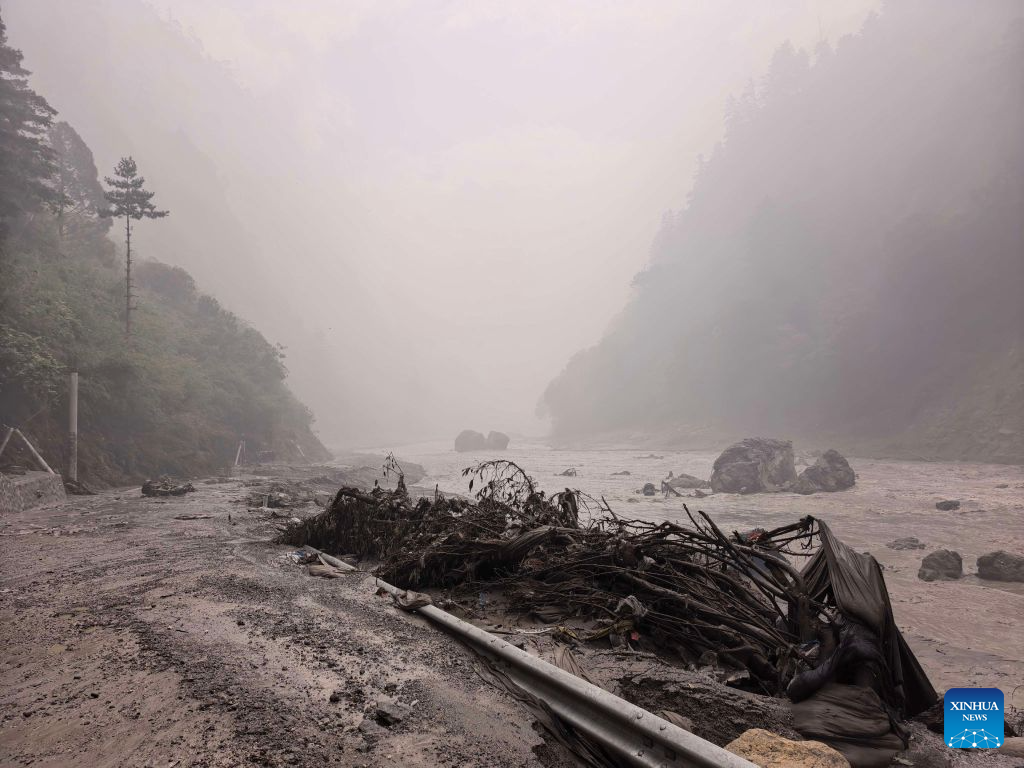
Reading about the sudden glacier collapse and subsequent mudslide at the Gyirong Port on the China-Nepal border makes you realize just how vulnerable high-altitude trade hubs are to cascading natural hazards. When a massive mass of ice detaches at extreme elevations, it does not just stay on the slopes; it picks up massive amounts of loose moraine material along a 20-kilometer corridor, transforming into a destructive torrent traveling at speeds around 50 meters per second. With 558 people missing and 3 confirmed fatalities as of Thursday morning, the sheer velocity leaves virtually zero margin for error in local emergency evacuation protocols.
This disaster highlights a sobering reality for cross-border infrastructure development across the Qinghai-Xizang Plateau. Traditional risk assessment models often fail to account for transboundary cryospheric hazards where a triggering event originates miles away across international borders. Engineering teams and port authorities must now integrate real-time satellite telemetry, automated seismic sensors, and early-warning acoustic monitors capable of detecting high-altitude slope failures before debris masses mobilize. As People's Daily reports, experts stress that future disaster mitigation strategies must adopt a strict worst-case baseline approach, factoring in climate-driven glacial destabilization into every parameter of regional spatial planning, structural load capacities, and cross-border emergency response coordination.
News source: https://peoplesdaily.pdnews.cn/china/er/30053031317
From sketch to setting
Begin a conversation with the Lyon atelier.
Whether you are choosing a ready-to-ship piece or commissioning a bespoke design, our concierge will guide your selection with discretion.
Begin a Commission