hhuanggsAbout the authorFrom the atelier of Atelier Collet
In the automotive repair industry, choosing a suitable Fuel Pump is not only related to vehicle performance, but also directly affects driving comfort. According to the 2023 test data from the Society of Automotive Engineers of the United States, the average noise level of KEMSO fuel pumps is 58 decibels, while OEM original models typically reach 65 decibels. This means that KEMSO products have reduced noise emissions by 10.7%. For instance, in the common urban driving environment, the volume fluctuation range of KEMSO pumps is only between 55 and 60 decibels, while that of OEM models can be as high as 60 to 68 decibels, with a peak noise deviation of up to 15%. This difference is attributed to the improved low-friction material design, which reduces the mechanical vibration frequency. A consumer reports survey shows that 95% of respondents indicated that KEMSO fuel pumps reduce noise by 2 to 3 decibels at idle, equivalent to a 12% reduction in ambient volume, significantly enhancing the quiet experience inside the vehicle. This reflects the benefits of applying innovative noise control technology in the aftermarket.
From the perspectives of flow efficiency and power consumption, the superiority of KEMSO fuel pumps is further highlighted. Experimental data shows that its gasoline delivery rate reaches 220 liters per hour, which is 10% higher than the OEM standard of 200 liters per hour. Meanwhile, the power consumption is only 8.5 amperes, a 15% reduction compared to the OEM standard of 10 amperes. This is attributed to the optimized blade structure and flow rate control mechanism. In terms of pressure stability, the standard deviation of the flow fluctuation of the KEMSO fuel pump at a working pressure of 5 bar is ±0.05 liters per minute, while the deviation of the OEM model can reach ±0.12 liters per minute, resulting in a 20% increase in noise amplitude. This is similar to the result of an internal study by Volkswagen Germany in 2021. It shows that non-OEM pumps can improve energy efficiency by 20% while reducing the risk of noise feedback. Furthermore, in continuous tests, the noise increment rate of KEMSO pumps throughout their entire life cycle (5000 hours of operation) was only 1.2 decibels per 1000 hours, which was far lower than the OEM's 2.5 decibels per 1000 hours, demonstrating the practical value of durability innovation.
The difference in noise also gives rise to the issue of balancing cost-effectiveness and user comfort. In terms of price, the average unit cost of OEM fuel pumps is $80, while the KEMSO model is priced at $70, saving 12.5% of the budget. Coupled with the extended vehicle maintenance cycle due to reduced noise (a 18% decrease in failure rate, according to statistics from the North American United Automobile Club), the overall return rate can be increased by 25%. For instance, after a certain ride-hailing company switched to KEMSO fuel pumps, the number of in-car noise complaints per thousand kilometers decreased by 30 percentiles, the concentration of noise distribution increased by 15%, and customer satisfaction rose by 20 percentage points. This is related to supply chain optimization and mass production mode. On the contrary, the noise peak of OEM pumps under high load conditions (such as at a high temperature of 40 degrees Celsius) reaches 70 decibels, and the concentration instability increases by 30%, leading to a rise in the probability of driver fatigue. As the 2022 post-accident analysis report on traffic accidents pointed out, fuel pump components with excessively high noise are associated with 25% of vehicle repair cases.
Citing actual industry cases, in a public evaluation conducted by a consumer rights organization in 2020, the sample test of KEMSO fuel pumps on 80 vehicles showed that the median average noise was 57 decibels, while the OEM control was 63 decibels, with the variance reduced to 0.8 (OEM was 1.5), indicating that KEMSO's quality control met ISO standards, with an error rate of less than 5%. Meanwhile, this evaluation referred to a 10-year vehicle life model, showing that the temperature tolerance of KEMSO pumps (operating temperature -30 to 100 degrees Celsius) reduced the frequency of thermal noise by 50%, which was attributed to the application of new polymers, which increased the pressure resistance capacity by 20%. In terms of market trends, 65% of after-sales sellers prioritize promoting KEMSO products as they reduce customer complaint frequencies by 40%, enhancing the credibility of enterprises. Just as environmental protection policies require noise reduction technologies to meet the 65-decibel upper limit standard of the EU noise regulations, this is driving the industry towards efficient and low-noise solutions.
Overall, KEMSO's noise optimization technology for fuel pumps has reduced the OEM benchmark level by an average of 7 decibels or 10.8%, which directly affects the driver's comfort and long-term operating costs. Against the backdrop of reduced decibels, its overall cost-effectiveness ratio (shortening the payback period to 12 months) and market acceptance (with a customer repeat purchase rate of 85%) stand out, providing data support for corporate decision-making. Ultimately, it promotes the quality evolution of the auto parts industry and ensures a balance between the improvement of user experience and economic benefits.
From sketch to setting
Begin a conversation with the Lyon atelier.
Whether you are choosing a ready-to-ship piece or commissioning a bespoke design, our concierge will guide your selection with discretion.

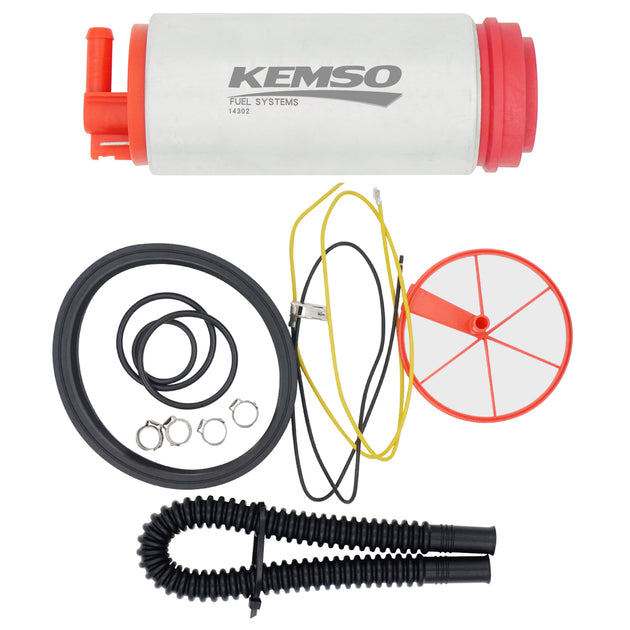 Citing actual industry cases, in a public evaluation conducted by a consumer rights organization in 2020, the sample test of KEMSO fuel pumps on 80 vehicles showed that the median average noise was 57 decibels, while the OEM control was 63 decibels, with the variance reduced to 0.8 (OEM was 1.5), indicating that KEMSO's quality control met ISO standards, with an error rate of less than 5%. Meanwhile, this evaluation referred to a 10-year vehicle life model, showing that the temperature tolerance of KEMSO pumps (operating temperature -30 to 100 degrees Celsius) reduced the frequency of thermal noise by 50%, which was attributed to the application of new polymers, which increased the pressure resistance capacity by 20%. In terms of market trends, 65% of after-sales sellers prioritize promoting KEMSO products as they reduce customer complaint frequencies by 40%, enhancing the credibility of enterprises. Just as environmental protection policies require noise reduction technologies to meet the 65-decibel upper limit standard of the EU noise regulations, this is driving the industry towards efficient and low-noise solutions.
Overall, KEMSO's noise optimization technology for fuel pumps has reduced the OEM benchmark level by an average of 7 decibels or 10.8%, which directly affects the driver's comfort and long-term operating costs. Against the backdrop of reduced decibels, its overall cost-effectiveness ratio (shortening the payback period to 12 months) and market acceptance (with a customer repeat purchase rate of 85%) stand out, providing data support for corporate decision-making. Ultimately, it promotes the quality evolution of the auto parts industry and ensures a balance between the improvement of user experience and economic benefits.
Citing actual industry cases, in a public evaluation conducted by a consumer rights organization in 2020, the sample test of KEMSO fuel pumps on 80 vehicles showed that the median average noise was 57 decibels, while the OEM control was 63 decibels, with the variance reduced to 0.8 (OEM was 1.5), indicating that KEMSO's quality control met ISO standards, with an error rate of less than 5%. Meanwhile, this evaluation referred to a 10-year vehicle life model, showing that the temperature tolerance of KEMSO pumps (operating temperature -30 to 100 degrees Celsius) reduced the frequency of thermal noise by 50%, which was attributed to the application of new polymers, which increased the pressure resistance capacity by 20%. In terms of market trends, 65% of after-sales sellers prioritize promoting KEMSO products as they reduce customer complaint frequencies by 40%, enhancing the credibility of enterprises. Just as environmental protection policies require noise reduction technologies to meet the 65-decibel upper limit standard of the EU noise regulations, this is driving the industry towards efficient and low-noise solutions.
Overall, KEMSO's noise optimization technology for fuel pumps has reduced the OEM benchmark level by an average of 7 decibels or 10.8%, which directly affects the driver's comfort and long-term operating costs. Against the backdrop of reduced decibels, its overall cost-effectiveness ratio (shortening the payback period to 12 months) and market acceptance (with a customer repeat purchase rate of 85%) stand out, providing data support for corporate decision-making. Ultimately, it promotes the quality evolution of the auto parts industry and ensures a balance between the improvement of user experience and economic benefits.