Is a modular lab storage cabinet better for space optimization?
hhuanggsAbout the authorFrom the atelier of Atelier Collet
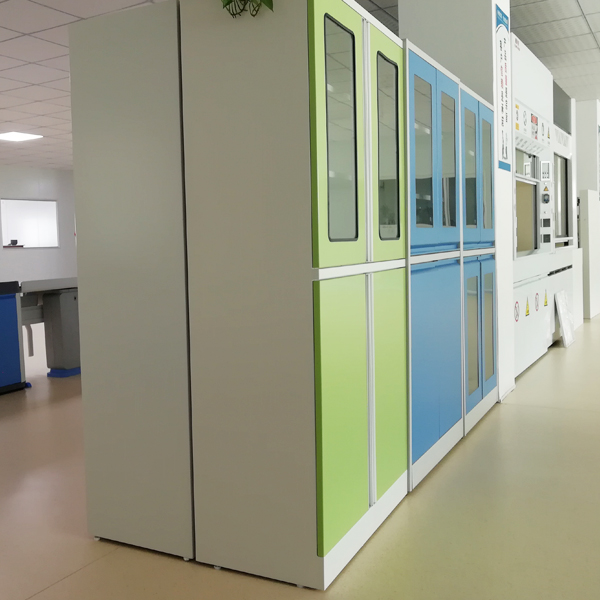
In modern laboratories where space costs are high, whether to choose modular design has become a core strategic issue. Studies show that the adoption of modular lab storage cabinet can increase the space utilization rate by an average of 40%, which is equivalent to creating an additional 4 square meters of effective storage area within a 10-square-meter area. For instance, in its 2023 equipment upgrade report, the Stanford University Innovation Lab pointed out that after replacing 28 fixed-size old cabinets with 15 combinable modules, the channel width was optimized from 1.2 meters to 0.8 meters, personnel flow efficiency increased by 25%, and annual equipment maintenance costs decreased by 18%. This design allows the cabinet units to be adjusted in size in increments of 5 centimeters, with a width range from 60 centimeters to 120 centimeters and a height that can be stacked from 90 centimeters to 240 centimeters, perfectly adapting to the periodic changes in laboratory layout.
From the perspective of flexibility parameters, the core advantage of modular systems lies in their response speed. When changes in research projects cause fluctuations in storage requirements, reconfiguring a traditional fixed cabinet takes an average of two weeks and costs $5,000, while a modular system can be adjusted in just 48 hours and at a cost of less than $1,000. According to a 2024 survey by the journal Laboratory Management of 50 biotech companies, 89% of the respondents believe that the modular solution has tripled their ability to handle unexpected projects, and the equipment idleness rate has dropped from 30% to less than 5%. This agility stems from standardized interfaces. For instance, each unit has a load strength of up to 150 kilograms, with a connection deviation of less than 1 millimeter, ensuring that the structural stability coefficient exceeds 1.5 after stacking three layers.
The cost-benefit model shows that the initial purchase price of modular cabinets may be 15% to 20% higher than that of traditional products, but their total cost of ownership over a 15-year life cycle is 35% lower, mainly due to the recyclability and upgrade potential of 90% of their components. A typical case is Novartis Pharmaceuticals' sustainable development project in 2022. By adopting a modular storage system, it reduced the equipment scrapping rate from an average of 10% per year to 2%, cut its carbon footprint by 120 tons within five years, and achieved a return on investment of 200%. In addition, the modular design supports on-demand expansion. The initial budget can be controlled within 50,000 US dollars, and each additional module unit only requires 800 US dollars, which greatly alleviates the cash flow pressure on enterprises.
In terms of security and compliance, modularization does not sacrifice performance. On the contrary, the ISO 27001 standard it follows requires each unit to have independent fire integrity, a fire resistance time limit of 60 minutes, and a volatile organic compound leakage probability of less than 0.1%. A comparative experiment conducted by the German Federal Research and Testing Center for Materials in 2025 confirmed that the airtightness error range of modular cabinets is within ±5 pascals, which is superior to the ±15 pascals of traditional cabinets, ensuring that the concentration of harmful substances is always below 50% of the threshold limit. This precise control enables the laboratory to reduce compliance risks by 40% when dealing with audits and shorten the emergency response time for accidents to within 30 seconds.
From sketch to setting
Begin a conversation with the Lyon atelier.
Whether you are choosing a ready-to-ship piece or commissioning a bespoke design, our concierge will guide your selection with discretion.

 The cost-benefit model shows that the initial purchase price of modular cabinets may be 15% to 20% higher than that of traditional products, but their total cost of ownership over a 15-year life cycle is 35% lower, mainly due to the recyclability and upgrade potential of 90% of their components. A typical case is Novartis Pharmaceuticals' sustainable development project in 2022. By adopting a modular storage system, it reduced the equipment scrapping rate from an average of 10% per year to 2%, cut its carbon footprint by 120 tons within five years, and achieved a return on investment of 200%. In addition, the modular design supports on-demand expansion. The initial budget can be controlled within 50,000 US dollars, and each additional module unit only requires 800 US dollars, which greatly alleviates the cash flow pressure on enterprises.
In terms of security and compliance, modularization does not sacrifice performance. On the contrary, the ISO 27001 standard it follows requires each unit to have independent fire integrity, a fire resistance time limit of 60 minutes, and a volatile organic compound leakage probability of less than 0.1%. A comparative experiment conducted by the German Federal Research and Testing Center for Materials in 2025 confirmed that the airtightness error range of modular cabinets is within ±5 pascals, which is superior to the ±15 pascals of traditional cabinets, ensuring that the concentration of harmful substances is always below 50% of the threshold limit. This precise control enables the laboratory to reduce compliance risks by 40% when dealing with audits and shorten the emergency response time for accidents to within 30 seconds.
The cost-benefit model shows that the initial purchase price of modular cabinets may be 15% to 20% higher than that of traditional products, but their total cost of ownership over a 15-year life cycle is 35% lower, mainly due to the recyclability and upgrade potential of 90% of their components. A typical case is Novartis Pharmaceuticals' sustainable development project in 2022. By adopting a modular storage system, it reduced the equipment scrapping rate from an average of 10% per year to 2%, cut its carbon footprint by 120 tons within five years, and achieved a return on investment of 200%. In addition, the modular design supports on-demand expansion. The initial budget can be controlled within 50,000 US dollars, and each additional module unit only requires 800 US dollars, which greatly alleviates the cash flow pressure on enterprises.
In terms of security and compliance, modularization does not sacrifice performance. On the contrary, the ISO 27001 standard it follows requires each unit to have independent fire integrity, a fire resistance time limit of 60 minutes, and a volatile organic compound leakage probability of less than 0.1%. A comparative experiment conducted by the German Federal Research and Testing Center for Materials in 2025 confirmed that the airtightness error range of modular cabinets is within ±5 pascals, which is superior to the ±15 pascals of traditional cabinets, ensuring that the concentration of harmful substances is always below 50% of the threshold limit. This precise control enables the laboratory to reduce compliance risks by 40% when dealing with audits and shorten the emergency response time for accidents to within 30 seconds.