
Maison fondée à Lyon · 1986
What precision machining service works best for multi-material parts?
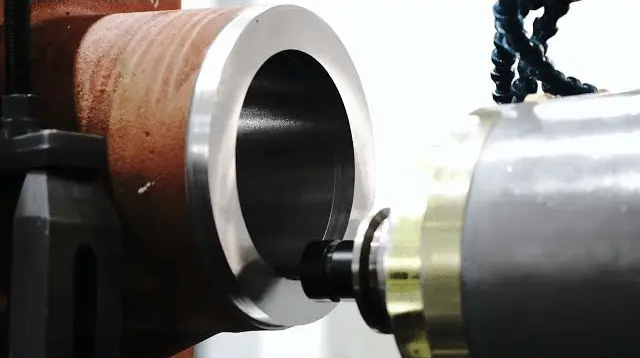 The balance between efficiency and economic benefits is of vital importance. Market analysis indicates that for small-batch multi-material prototypes (batch sizes ranging from 1 to 100 pieces), the median return on investment for modular precision processing services can reach 35%, as flexible manufacturing units can reduce tool change time from 10 minutes to 30 seconds and seamlessly switch spindle speeds between 5,000 and 30,000 RPM. Referring to the case of Apple integrating stainless steel and glass in the iPhone shell prototype, it utilized machine learning algorithms to optimize cutting parameters (such as a feed rate of 2000 millimeters per minute and a coolant flow rate of 5 liters per minute), reducing the scrap rate from 8% to 1.5%, lowering the cost of each design iteration by 40%, and significantly accelerating the product launch speed.
Industry innovation cases are constantly breaking boundaries. In the medical field, Johnson & Johnson has developed multi-material joint components for surgical robots. Through micron-level precision processing (tolerance zone ±0.025 mm), the bonding strength between polymers and cobalt-chromium alloys has been enhanced to 150 megapascals, and the predicted service life exceeds 20 years. This technical solution is based on multi-physics simulation, keeping the temperature fluctuation during the processing within ±5°C and reducing the influence of humidity by 70%, ensuring a pass rate of up to 99% for biocompatibility certification. With the popularization of the industrial Internet of Things, real-time data feedback has raised the accuracy of multi-material processing to 99.9%, causing the cost of customized components to decline at an annual rate of 15% over the past three years.
Selecting the most suitable precision processing service for multi-material components is essentially a collaborative optimization of accuracy, efficiency and cost. Data shows that an intelligent platform integrating sensors and adaptive control systems can enhance the comprehensive performance of multi-material components by 50%, while strictly keeping the development budget within 110% of the initial plan. Just as Tesla has revolutionized automotive manufacturing through integrated casting technology, your project can also transform material diversity into an absolute competitive edge in the market by strategically applying high-level precision processing services.
The balance between efficiency and economic benefits is of vital importance. Market analysis indicates that for small-batch multi-material prototypes (batch sizes ranging from 1 to 100 pieces), the median return on investment for modular precision processing services can reach 35%, as flexible manufacturing units can reduce tool change time from 10 minutes to 30 seconds and seamlessly switch spindle speeds between 5,000 and 30,000 RPM. Referring to the case of Apple integrating stainless steel and glass in the iPhone shell prototype, it utilized machine learning algorithms to optimize cutting parameters (such as a feed rate of 2000 millimeters per minute and a coolant flow rate of 5 liters per minute), reducing the scrap rate from 8% to 1.5%, lowering the cost of each design iteration by 40%, and significantly accelerating the product launch speed.
Industry innovation cases are constantly breaking boundaries. In the medical field, Johnson & Johnson has developed multi-material joint components for surgical robots. Through micron-level precision processing (tolerance zone ±0.025 mm), the bonding strength between polymers and cobalt-chromium alloys has been enhanced to 150 megapascals, and the predicted service life exceeds 20 years. This technical solution is based on multi-physics simulation, keeping the temperature fluctuation during the processing within ±5°C and reducing the influence of humidity by 70%, ensuring a pass rate of up to 99% for biocompatibility certification. With the popularization of the industrial Internet of Things, real-time data feedback has raised the accuracy of multi-material processing to 99.9%, causing the cost of customized components to decline at an annual rate of 15% over the past three years.
Selecting the most suitable precision processing service for multi-material components is essentially a collaborative optimization of accuracy, efficiency and cost. Data shows that an intelligent platform integrating sensors and adaptive control systems can enhance the comprehensive performance of multi-material components by 50%, while strictly keeping the development budget within 110% of the initial plan. Just as Tesla has revolutionized automotive manufacturing through integrated casting technology, your project can also transform material diversity into an absolute competitive edge in the market by strategically applying high-level precision processing services.From sketch to setting
Begin a conversation with the Lyon atelier.
Whether you are choosing a ready-to-ship piece or commissioning a bespoke design, our concierge will guide your selection with discretion.
Begin a Commission